
Whole home water filtration system installations are a hot topic among homeowners who value healthy water, cleaner appliances, and lower maintenance headaches. But figuring out the true costs, hidden drawbacks, and what actually works is not always straightforward. This guide cuts through the confusion by giving you realistic numbers, honest pros and cons, and straight-shooting advice to help you decide if a whole home water filtration system is right for your needs—and how to get the most value from your investment.
Key Takeaways
- Expect to spend $1,200 to $5,800 on a professionally installed whole home water filtration system, with higher-end and well-water units costing more.
- Maintenance, water pressure reduction, and recurring filter costs are the most common ongoing pain points—plan for regular filter changes every 3 to 12 months.
- No single system removes all contaminants; combining filters and add-ons like UV or RO add-ons delivers better results, especially for well water or homes with specific contaminant concerns.
- What Is a Whole Home Water Filtration System—and Why Get One?
- Step-by-Step: Choosing, Installing, and Maintaining Your System
- Advanced Analysis and Common Pitfalls: What Other Guides Miss
- Conclusion: Should You Install a Whole Home Water Filtration System?
- Frequently Asked Questions
What Is a Whole Home Water Filtration System—and Why Get One?
A whole home water filtration system, sometimes called a point-of-entry (POE) filter, is installed where the water line enters your home. Every tap—from kitchen to shower—delivers filtered water free from common contaminants like sediment, chlorine, and some heavy metals. These systems can improve taste, prevent scale buildup, and help protect appliances from mineral damage. They’re especially useful for homes on well water, which can bring in sediment, bacteria, or unexpected minerals that municipal water systems don’t deal with.
The chief reasons homeowners invest in a whole home system usually include:
- Cleaner, better-tasting water from every tap
- Reduced limescale, meaning longer life for plumbing and appliances
- Peace of mind about contaminants in local water, whether from old pipes or environmental issues (learn more about water contaminant risks and how filters stack up)
- Eliminating the need for individual faucet or pitcher filters
Still, no system is perfect. Many units don’t remove toxins like PFAS, viruses, or fluoride out-of-the-box. That’s why understanding your specific water source—and matching it to the right treatment type—is crucial. For details on common filter types, see our Water Softener vs. Whole House Filter guide.
Step-by-Step: Choosing, Installing, and Maintaining Your System
Navigating the purchase and installation of a whole home water filtration system doesn’t have to be overwhelming. Follow this process to avoid costly mistakes and make sure you get what you pay for:
-
Test Your Water
- Order a comprehensive water quality test for your home’s supply (well or municipal). Look for contaminants such as lead, bacteria, iron, PFAS, chlorine, and hardness.
- If you’re unsure, our best water test kit guide covers reliable, easy-to-read test kits.
-
Pick the Right System Type Based on Your Needs
- If sediment, rust, or dirt are biggest concerns: start with a sediment pre-filter.
- If chemical taste or odor is present: a carbon block system is often sufficient.
- For well water: choose multi-stage systems with KDF, carbon, and UV or RO add-ons for bacteria and heavy metals (source).
- For fluoride, viruses, or PFAS: look for systems with dedicated add-on filters or advanced RO/UV technology.
-
Budget for Full Installation and Ongoing Costs
- Typical installed cost: $1,200 to $5,800 (source). Complex setups can reach $8,000-$10,000 for large homes or high-end RO systems (source).
- Labor runs $200 to $600. Add-ons like electrical work may tack on $150-$350 (source).
- Expect to replace filters every 3 to 12 months at $20-$200 each. Annual media/tank changes may be $200-$300 depending on system capacity and quality.
-
Choose Professional Installation (Unless You’re Very Experienced)
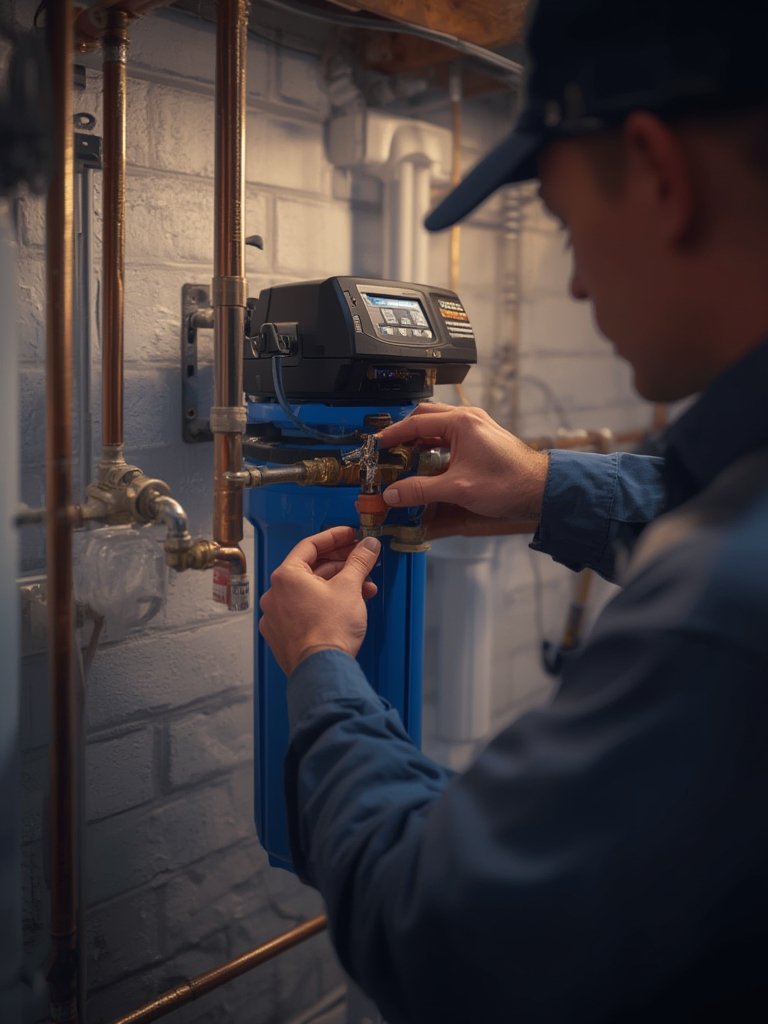
- Incorrect DIY installs are a major cause of reduced water pressure, leaks, or filter failure. Unless you are skilled with plumbing modifications and know your local building codes, hire a pro.
-
Establish a Realistic Maintenance Schedule
- Mark your calendar to check filter flow rates, clean housings, and monitor water pressure. Address slowdowns immediately—a drop can indicate clogging or failed cartridges.
- Keep spare filter cartridges on hand so you can swap out as soon as needed. Consider setting reminders—a common user complaint is forgetting and letting maintenance slide until taste or flow suffers.
Extra tips:
- Install shutoff valves before and after the filter unit for easy servicing.
- Label filter housing dates—write install dates directly on the cartridge or use a simple magnet calendar on your water line.
- If water pressure is an issue after installation, check that filters are rated for your home’s PSI. Multi-stage setups may require a booster or larger tank to keep flow strong—see our well water filter reviews for options.
- For hard water, pair your system with a compatible softener unit (Water Softener Installation Guide).
Advanced Analysis and Common Pitfalls: What Other Guides Miss
Most buying guides skip over real-life pain points that can eat up your savings or leave you frustrated months after installation. Here’s what you won’t always hear:
- Maintenance Fatigue: Manufacturers may claim “one-year” filter life, but typical homes need replacements every 3 to 12 months. Many users find filter costs add up to $100-$400/year, especially for large households or high-sediment water (source).
- Water Pressure Drops: Stacked filters and long plumbing runs often cause a detectable drop in water pressure, especially in older homes or those using undersized filter housings.
- Hidden Contaminant Gaps: Standard carbon or KDF systems handle sediment, some chlorine, and certain metals—but often miss PFAS, some pesticides, cryptosporidium, viruses, or fluoride. Reverse osmosis and UV modules do help but are pricier and need more frequent service.
- Complex Pricing and Sizing: House size, water use, and location drive costs higher than most people expect—large homes or well systems can require oversized tanks or commercial-grade options approaching $8,000-$10,000 (see research).
- Labor & Permitting: Don’t overlook add-ons like electrical outlets ($150-$350), potential permits ($30-$500), and geographic labor variations. For a full breakdown, see our cost calculator.
To see how common factors affect your wallet and filter efficacy, check the comparison below (well vs. municipal, system type, add-ons):
| Cost Factor | Low | High | Notes |
|---|---|---|---|
| System Type (Carbon/RO/UV) | $300 | $5,000+ | Carbon/Basic vs. Reverse Osmosis or UV Add-on (source) |
| Well Water vs. Municipal | $800 | $5,000+ | Well systems require more robust pre-filtration |
| Home Size & Flow Rate | Standard | High | Larger homes need bigger tanks, raising cost (source) |
| Installation Labor | $200 | $600+ | Varies by region and complexity |
| Add-ons (UV, Softener) | $100 | $2,500 | For specific contaminants or hard water |
| Ongoing Filter Replacement | $20/year | $400+/year | Depends on use and system size |

Final reality check: No single system does it all. Brand marketing often omits weaknesses or ongoing expenses. Always check independent performance data, and if you’re dealing with well water, take a close look at whole house vs. under sink filter options and what causes filter failures before committing.
Conclusion: Should You Install a Whole Home Water Filtration System?
A whole home water filtration system can deliver cleaner, safer water for your entire house and may reduce long-term plumbing issues caused by sediment or minerals. Expect to spend $2,500 on average for quality results, with higher-end reverse osmosis or multi-stage systems costing more—especially for large homes or well-water properties. Ongoing filter replacements and occasional maintenance can add $100 to $400 per year to your budget. Keep in mind that no system removes every contaminant, so match your choice to your source water and consider modular upgrades as needed. For most families, the investment pays off in convenience, peace of mind, and appliance protection over time.
Ready to get started? Find the best system for your needs with our whole house water filter buying guide, or use our cost calculator to get personalized estimates. The right whole home water filtration system is an investment in your family’s health and your home’s value—take action today.
Frequently Asked Questions
How much does a whole home water filtration system cost to install in 2024?
Installed costs typically range from $1,200 to $5,800, with labor adding $200 to $600. High-end systems for large homes or well water can reach $8,000 or more.
How often do I need to replace the filters?
Most filters need replacement every 3 to 12 months, depending on water use and quality. Tank media typically lasts up to 3 years or 300,000 gallons.
Will a whole home system reduce my water pressure?
It can, especially with undersized filter housings or multi-stage setups. Choose a system matched to your flow rate and house size to minimize pressure loss.
Does a whole home water filter remove all contaminants?
No. Standard carbon or KDF systems miss PFAS, some pesticides, viruses, and fluoride. Consider add-on UV or RO filters for more complete treatment.
Can I install a whole home water filter myself?
It’s possible for skilled DIYers, but mistakes can cause leaks, pressure loss, and invalid warranties. Professional installation is highly recommended for most homeowners.